
How to use Skill Coach in a shop
Start with one person, one workflow, and one week. The point is not to build a giant training manual. The point is to make the next useful skill visible and repeatable.
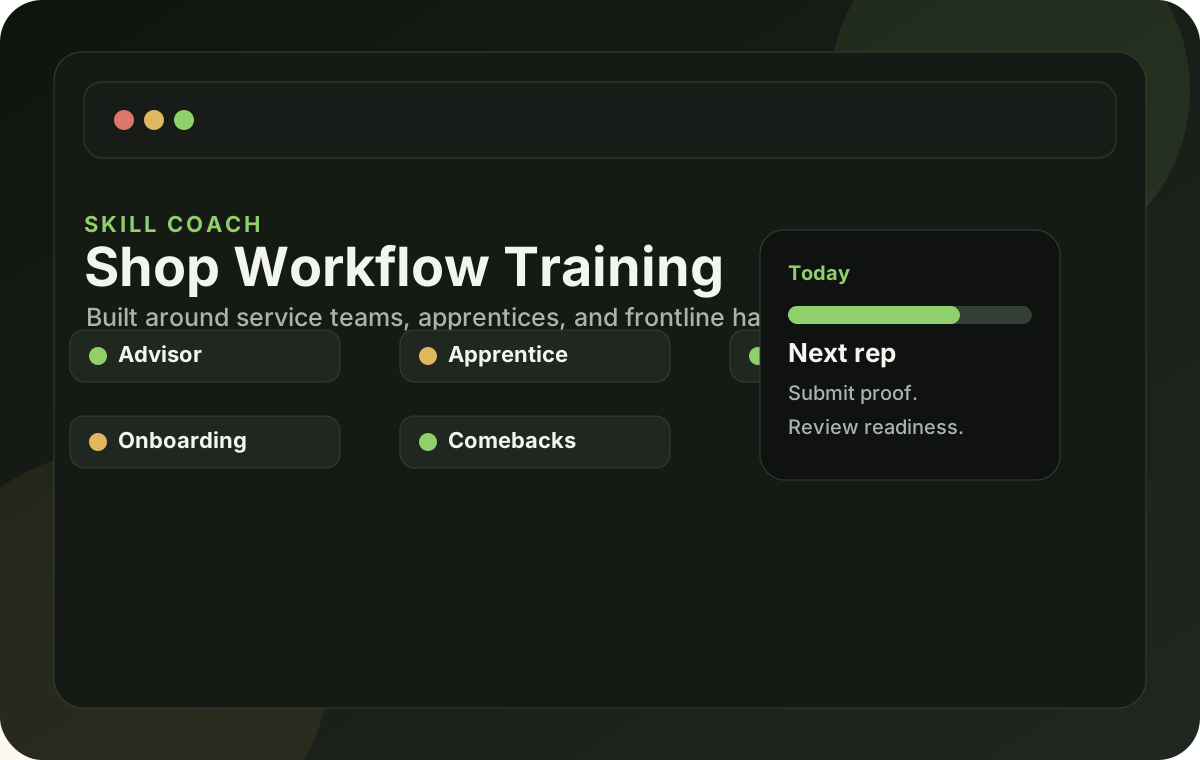
Use it in six steps
- Pick the learner. Choose one advisor, apprentice, technician, or new hire.
- Pick one workflow. Examples: phone intake, brake inspection handoff, oil service inspection, estimate explanation, customer update, or end-of-day handoff.
- Define proof. Decide what the learner must submit: a written note, call summary, inspection checklist, measurement sheet, photo set, or handoff script.
- Assign daily reps. Keep the rep small enough to finish during a real shop day.
- Review the proof. Coach one correction at a time. Do not turn every review into a lecture.
- Make a readiness decision. Advance, repeat, supervise, or hold the workflow back.
Good first workflows
Service advisor
- Phone intake notes
- Estimate explanation
- Approval request
- Customer update rhythm
- Declined work follow-up
Apprentice technician
- Oil service inspection
- Brake measurements
- Battery test documentation
- Tire inspection
- Comeback note review
What to avoid
- Do not train five workflows at once.
- Do not make the proof vague.
- Do not rely only on shadowing.
- Do not move a learner forward because they are confident. Move them forward because the proof is good.
Weekly review script
Ask: What did we train? What proof did we collect? What improved? What still needs correction? Can this person perform the workflow alone, with supervision, or not yet?
Turn this into a live shop training sprint
Skill Coach turns the idea into daily reps, proof reviews, reminders, and a manager-ready progress trail.